Français
 لالعربية
 Português
 Español
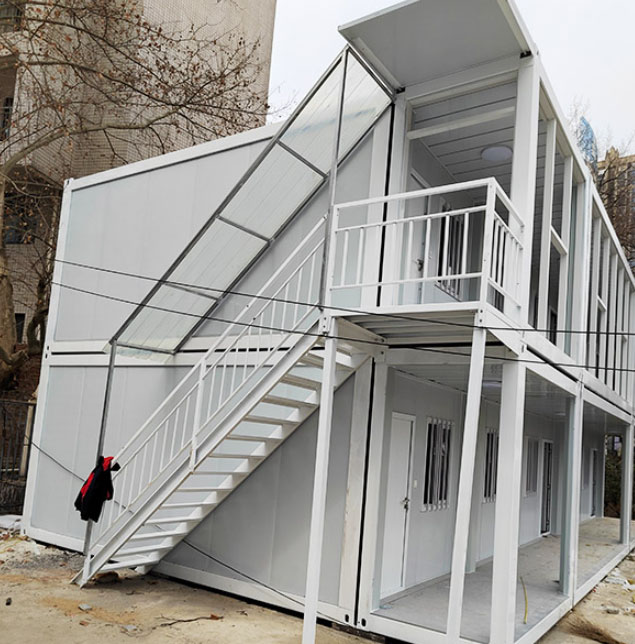
For companies operating in mining, oil and gas fields, and large engineering projects, infrastructure is often the foundation of success. Before equipment arrives and before production begins, there is one essential question: how can a reliable living and working environment be established quickly in remote locations? This challenge has encouraged more industrial companies to explore the advantages of a modular house system combined with advanced container buildings, flexible container houses, and professional office container solutions.
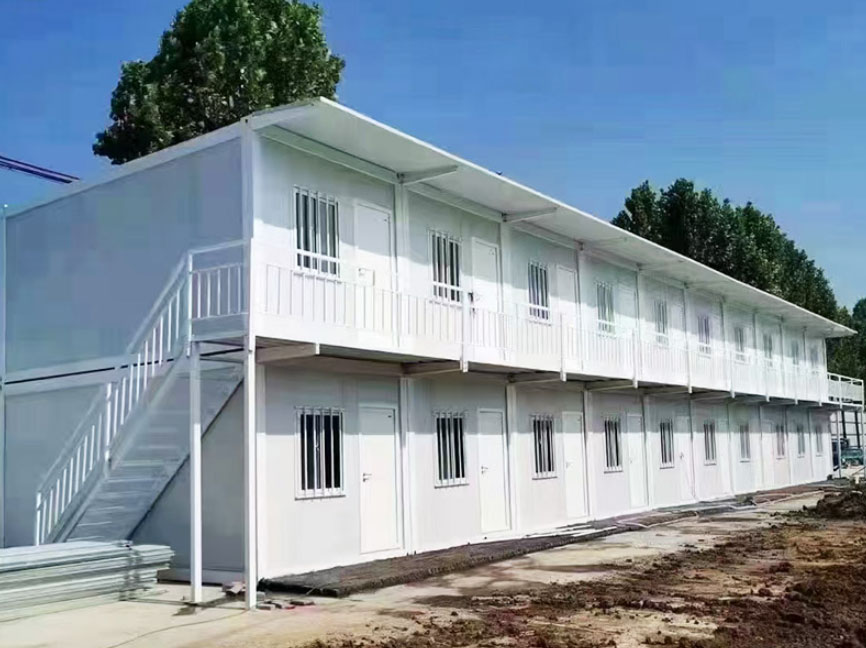
Remote industrial projects are different from ordinary construction environments. A mining camp in a desert area, an oilfield in an isolated region, or an engineering project in a difficult location requires buildings that can be delivered, installed, and operated efficiently. Traditional constructions often involve long preparation periods, complicated site coordination, and heavy dependence on local resources. A modern modular house provides a different approach by moving much of the production process away from the project site.
The increasing adoption of container buildings in industrial applications is not simply because they are faster to install. The real value comes from their ability to support complete project operations. A group of container houses can provide accommodation for workers, while an office container can support project management, administration, and technical coordination. Together, these solutions create a complete working environment designed for demanding industrial conditions.
A common question from mining and energy companies is: “Can a modular house system really meet the requirements of a large-scale industrial camp?” The answer is yes, when the system is professionally planned and manufactured. Modern modular house solutions are no longer limited to simple temporary facilities. They are widely used for worker accommodation, site offices, dining facilities, medical rooms, training areas, and integrated project camps.
For large mining operations, workforce management is a major challenge. Thousands of workers may need accommodation close to the production area. Building permanent structures through traditional constructions can take significant time and create unnecessary delays. By using container houses, companies can establish accommodation facilities faster and expand them as workforce requirements increase.
The same flexibility applies to management facilities. An office container is not only a small workspace; it can become the operational center of a project. Engineers, supervisors, and managers need efficient spaces for meetings, planning, reporting, and communication. A well-designed office container integrated into a larger system of container buildings helps create a professional environment close to the work area.
Why are more oilfield operators choosing modular house solutions for field operations? The reason is adaptability. Oil and gas projects often move through different stages, from exploration to drilling and production. Each stage may require different numbers of workers and different types of facilities. A modular house system allows companies to adjust their infrastructure according to actual project progress.
A major advantage of container buildings is that they support phased development. A project does not need to build the entire camp at the beginning. Instead, companies can start with essential container houses and add more units when demand increases. Additional accommodation, storage areas, or an expanded office container setup can be introduced without interrupting existing operations.
Another important consideration for industrial users is transportation. Many mining and oilfield projects are located far from major cities, where logistics can become a serious challenge. Transporting traditional building materials, managing multiple suppliers, and coordinating local labor can create uncertainty.
This is where container buildings offer a practical advantage. Factory production allows better preparation before delivery. Units can be manufactured, inspected, and transported according to project schedules. A modular house approach reduces the complexity of on-site construction and allows companies to focus resources on their core operations.
Environmental conditions are another factor that cannot be ignored. Industrial camps may face extreme heat, cold climates, strong winds, dust, or heavy industrial activity. So, what makes container houses suitable for these demanding environments?
The answer is the combination of design planning, manufacturing quality, and proper project management. Modern container houses are developed for continuous use and can provide comfortable accommodation even in challenging locations. When combined with reliable container buildings, they create stable facilities that support long-term operations.
For engineering contractors, flexibility is often a key requirement. Large infrastructure projects may involve temporary work areas, changing workforce numbers, or multiple construction phases. A modular house system provides the ability to relocate, expand, or reorganize facilities according to project needs.
Compared with traditional constructions, modular solutions reduce dependency on permanent structures. A container house can serve one project and later be adapted for another location. An office container can be moved closer to a new operational area when project conditions change. This flexibility provides significant value for companies managing multiple industrial sites.
However, selecting the right supplier is one of the most important decisions for large-scale users. A question frequently asked by procurement teams is: “How can we ensure that our modular buildings will be delivered consistently for a complex international project?”
The answer lies in supplier experience, manufacturing capacity, and integrated service capability. Lida Group, established in 1993, has developed extensive experience in global modular construction projects. The company has completed more than 5000 projects and supplied products to 152 countries and regions, supporting customers across different industries and environments.
One of the key strengths of Lida Group is its one-stop service platform for integrated building. For mining companies, engineering contractors, and oilfield operators, managing multiple suppliers can increase project risks. A complete solution provider can coordinate production, delivery, and installation more effectively, helping customers achieve smoother project execution.
Manufacturing capability is another important factor for large industrial projects. Lida Group operates six container modular housing production lines and eight steel structure production lines, providing strong support for large-volume container buildings, container houses, and office container projects.
This production capacity allows the company to support different project scales, from a small remote site office to a complete mining camp with multiple functional areas. Whether the requirement involves worker accommodation, administration facilities, or integrated operational spaces, a professional modular house supplier can provide more reliable project support.
International certification is also important for global users. Industrial companies operating across different countries often require products that meet recognized standards. Lida Group products have achieved ISO and CE certifications, while the company has obtained more than 60 patents related to modular building innovation.
Beyond delivery speed, modern industrial customers are also considering long-term efficiency. Can container buildings support sustainable project development? Increasingly, the answer is yes. Modular systems reduce unnecessary construction waste and allow buildings to be reused, relocated, or expanded. A container house is not simply a temporary structure; it can become a flexible asset throughout different project stages.
For oil and gas fields, mining operations, and engineering projects, the future of site infrastructure is moving toward smarter and more adaptable solutions. A modular house system provides companies with better control over project timelines, workforce accommodation, and operational expansion.
As industrial activities continue to move into remote regions, the demand for reliable container buildings, efficient container houses, and practical office container facilities will continue to grow. Companies need solutions that can support their operations today while remaining flexible for tomorrow.
With decades of experience, strong manufacturing resources, and global delivery capability, Lida Group continues to provide integrated modular solutions for demanding industrial environments. From remote mining camps to oilfield bases and engineering project facilities, professional modular house systems are helping companies build faster, operate more efficiently, and respond better to changing project requirements.